
Sara Azzarelli in conversation with dancer and designer Silvia Sfligotti
June 2021

Photo credit: Norbert Schatz
Silvia Sfligiotti is a Graphic Designer based in Milan, a university lecturer and a Contact Improv practitioner.
Sara Azzarelli and Silvia met a couple of years ago during a Dance Mag movement workshop facilitated by Sara at the 2019 Milan Book Fair. With the same enthusiasm Silvia danced during the workshop, she's been also following and supporting a Dance Mag since its first issue.
Silvia, you are a graphic designer and a dance practitioner; how do these two aspects of your life coexist?
Actually, the two were separated for a long time until I came across Contact Improvisation. This type of dance with its implied community life and close relationships through the body, changed something fundamental in my approach to Design. If I take Visual Design to be a means of communication, then Contact Improvisation taught me an efficient way of listening, giving space to external inputs, and transforming it. At some point, I realized that all my work was brimming with dance, perhaps not in terms of final products but certainly in terms of the processes. So, I got inspired to make it part of my teaching and to share the approach of Contact Improv with other people working in the Design field.
What an interesting merging! Tell us more about how you did that. In which context and with whom do you share this approach?
As a professor of the History of Graphic Design and Visual Communication, I try to make my students learn through their bodies. It is not the usual thing to do in a university setting, but I like to introduce body awareness to formal teaching. For example, I take students outdoors and guide them through breathing exercises or balance-unbalance games. The whole body is engaged.
I am also currently in the process of developing movement workshops for professional graphic designers. The project so far involves people I already know from the design field. I guess you can say we are still in the experimental phase. The idea is to explore and build an efficient structure for the workshop series before making a call for external participants. We have already conducted three workshops, focusing on a specific concept each time: Space, the Other, and the Group. Participants' feedback has been multi-colored and stimulating. We are working on a fourth, investigating Improvisation, but this has been suspended since the pandemic started.
Your students are so lucky! And your colleagues too. It seems like Contact Improvisation permeates all aspects of your life: how did you handle being deprived of contact for a year and a half?
It's been hard. Through Contact improvisation, I have learned to overcome my fear of contact and to express my intentions clearly in everyday interactions. I feel like the pandemic brought me ten years back, to the time when I used to feel constantly embarrassed negotiating contact with people. Above all, I have desperately missed that judge-free, safe space of trust that only contact jam sessions and festivals can create. In these spaces, you can weave close and deep relationships through body and trust people completely without even knowing their names.
Luckily, I met my partner in a Contact Improv event, so we share the same need and passion, and we try to practice together, although it is not the same as in a group. One beautiful spontaneous dance happened in Verbania: we were at the park, sitting on wonderful round-shaped marble benches and without even realizing we began playing with shapes, and the dance started.
That sounds amazing! Silvia, you are a long-standing supporter of a Dance Mag, what makes this magazine special to you?
Well, this is the first time that a dance magazine has captivated me so much. I think the reason is that your concept of dance is extended to all dimensions of life. We could maybe say that it is a magazine that tells sensorial experiences. This idea of experiences in everyday life through the body and its movement is particularly meaningful to me. Generally, at least here in Italy, we identify “dance” with choreographic practices, so when I bought the first issue, I had expectations that have been pleasantly not met. The magazine shows how movement can become a lens through which it is possible to see the way people stay together in the world.
You’ve described our intention perfectly! I can’t wait to hear your opinion of the visual aspect of the magazine now.
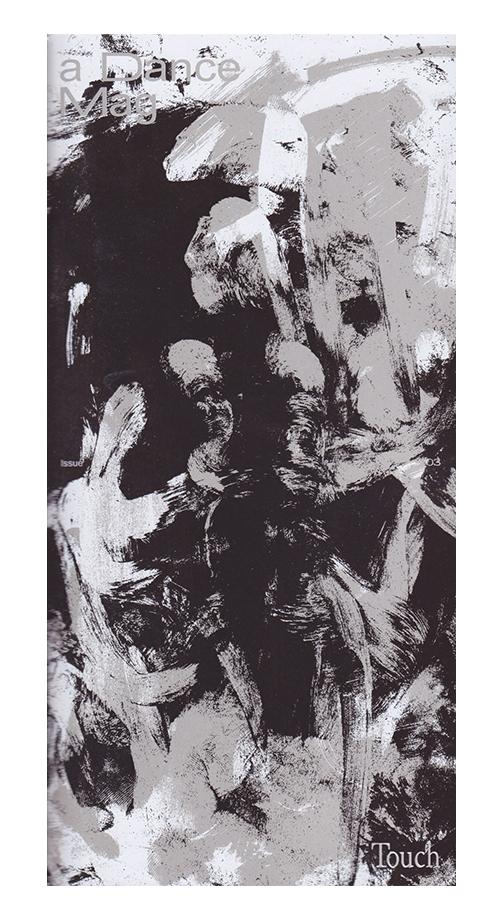
I was just about to say that another aspect of the magazine that I really appreciate is its visual design. I love the choice to favor abstract illustrations over photographs because they leave the reader’s experience much more open. Dance reviews usually feature figurative pictures of dancing bodies, but the result is very formal. a Dance Mag doesn't show bodies but makes you feel them.
Which is your favorite issue to date?
I like all of them because I think they open doors: some stories are closer to my experiences, others quite far, but in both cases, they are narrated in a way that makes it easy to empathize. I think the first issue, Transcendence, was very distant from my dance experience, but it was more stimulating because it made me question my boundaries and discover practices I never heard about and feel emotions that I would not associate with movement. I think about the piece on possession in Ghana or your piece about Bharatanatyam as a safe space to explore one’s gender identity: these experiences are not familiar to me but now I know they exist.
How about the touch issue?
I am still reading it, but a piece that struck me so far is: Have You Ever Touched Palestine? by Zena Takieddine. The political situation in Palestine is an issue I care about, and I like the writer’s approach to the story: she is into the situation but she's also quite critical.
Silvia, I think I know the answer, but: what will be the first thing you will do when pandemic restrictions get waived?
A Contact Improv jam session full of strangers! (laughs).